A Biblical and Quranic Study on the Last Judgment of Living Nations and Their Rulers as a Preliminary Judgment Prior to the Day of Judgment and the Second Coming of Jesus Christ
This article offers a distinct understanding of biblical and Quranic texts. Here, the «Last Judgment» is understood not as the final Day of Judgment and the Second Coming of Jesus Christ, but as the preceding period of God’s judgment upon the living nations: a time of trial, rebuke, separation of people, repentance, and the determination of who shall enter the coming order of the Kingdom of God. This distinction is not formulated in the Bible or the Quran as a single ready-made definition; it is a synthesis of imagery dispersed across various sections of these sources.
1. Why the Last Judgment Should Be Distinguished from the Day of Judgment
1.1. In the Revelation of John, the end-time events form a sequence. First, the seals are opened, then the trumpets sound, and the bowls of wrath are poured out; in parallel, the rebuke of the world, opposition to God, the fall of Babylon, and the victory of Christ take place. Only after the description of Christ’s reign and the final rebellion does the scene of the Great White Throne follow: the books and the Book of Life are opened, and the dead are judged according to what is written in the books, according to their deeds (Rev. 20:11–15). It is precisely this final scene that is naturally called the ultimate Day of Judgment.
1.2. However, before this scene, Revelation demonstrates another process. Christ addresses the churches with a call to remember, repent, and watch. In Thyatira, it is said that the sinner is given time to repent, and then: «I will give to each of you according to your works» (Rev. 2:21–23). Sardis receives the command: «Be watchful… and repent» (Rev. 3:2–3). Laodicea is told: «Be zealous therefore, and repent» (Rev. 3:19). Consequently, in Revelation itself, judgment upon the moral state of people begins even prior to the final scene of the Great White Throne.
2. Judgment as a Trial and Purification of the World
2.1. After the opening of the sixth seal, an earthquake occurs, the sun and moon darken, stars fall, and mountains and islands are moved from their places. The powerful of the world hide and say: «the great day of His wrath has come, and who can stand?» (Rev. 6:12–17). This shows a world undergoing a convulsion in which the true state of human beings is exposed.
2.2. Revelation also shows the testimony of the prophets and the possibility of conversion: after the resurrection of the two witnesses, some of those who witness what happens are overcome with fear and give glory to God (Rev. 11:3–13). Therefore, in the narrative, there is a recurring motif: divine intervention simultaneously judges evil and opens an opportunity for humanity to turn to God.
2.3. This motif is expressed with particular clarity in the Quran. In 30:41, it is stated that corruption appears on land and sea because of human deeds, and people taste the consequences of their actions «so that they may return» to the straight path. In 39:53–55, God’s mercy and the call to turn to the Lord before the punishment arrives are voiced simultaneously.
3. Who Passes Through the Last Judgment
3.1. In the proposed model, the Last Judgment is intended primarily for the living. Its task is to separate those who are capable of entering the coming divine order from those who definitively reject God and goodness. Revelation speaks of the Book of Life and illustrates the difference between those who keep the commandments of God and those who worship the beast.
3.2. The image of Babylon is essential here. An angel proclaims its fall, followed by the call: «Come out of her, my people, lest you take part in her sins.» Before judgment, there exists an opportunity to separate oneself from the system of evil and not share its fate. In this sense, the Last Judgment can be understood as a time of final moral choice.
3.3. The question of repentance is particularly critical here. The biblical text demonstrates that Christ not only accuses but also leaves time for conversion. The Quran likewise connects the testing through the consequences of human actions with the possibility of returning to God. Therefore, a person’s fate is determined not by a simple division into «sinners» and «sinless,» but by whether a person is capable of acknowledging their evil, sincerely repenting, receiving forgiveness, and changing their life.
4. Europe and the Territory of the USSR as the Epicenter for the Purification of Humanity
4.1. The special position of Europe and the territory of the USSR in this concept should be viewed with caution. Neither the Revelation of John nor the Quran explicitly names modern Europe or the USSR, nor do they state that prior to the Day of Judgment only those who love God must remain in these territories. Consequently, this is not a literal biblical or Quranic assertion, but a hypothesis of our study resulting from specific historical events.
4.2. The primary such events include the Baptism of Kyiv, God’s establishment of His royal throne with the tsars of the Romanov Dynasty, and constant attempts to seize Russian lands (Rus or Ruthenia) in order to destroy Orthodoxy by any means.
4.3. Particularly distinguished in this regard were the peoples of Germany and the Bolsheviks, who seized power in Petrograd in 1918 and subsequently murdered Tsar Nicholas, his wife, children, and dogs, and for many years attempted to split Russia and destroy the Soviet Union (USSR).
4.4. In any case, the purpose of the Last Judgment does not consist in the destruction of people for the sake of destruction itself. Its purpose lies in the purification of society through the revelation of truth, trial, the call to repentance, and the separation of those who voluntarily remain with evil.
4.5. However, the main purpose of the Last Judgment of living nations and their rulers is not only to purify them from evil and all sinfulness, but also to prepare them to meet the King of Kings. For this, people must be purified internally, expel from their midst all sinners who defile the people of God, and build the House of God in Crimea. Because when God comes to Earth, He expects that His loyal subjects will be found to provide Him with housing. Sinners whose names are not written in the Book of Life must not see God and cannot approach the House of God closer than 7,000 kilometers.

4.6. The construction of the House of God will be managed by people whose names are written in the Book of Life.
4.7. For those who acknowledge their guilt and turn to God, the opportunity to receive God’s mercy remains. For those who, after open testimony and warning, definitively reject God and goodness, judgment becomes the confirmation of the path they have chosen.
4.8. The nations of Europe and the former USSR, especially the people of Russia, have long rejected God and continue to trample upon the laws of God and the foundations of human morality, particularly regarding the sanctity of marriage and the godly conception of children. Therefore, it will not be a great exaggeration to assert that the primary and fiercest wrath of God at the Last Judgment will have to be experienced specifically by the nations of Europe and the former USSR.
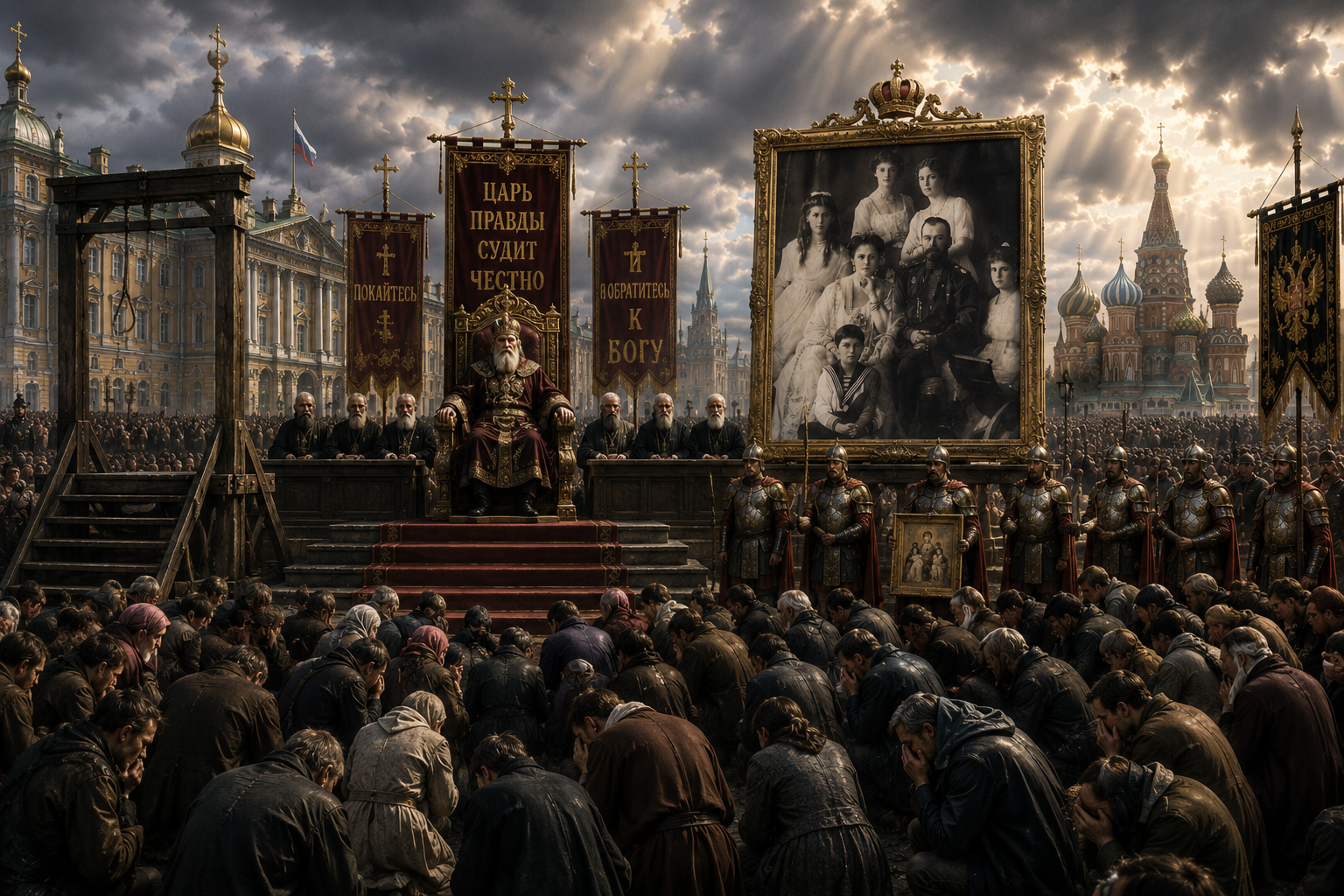
4.9. The peoples of the former USSR will also have to answer, in this proposed model, for the treason against the Tsar committed by their forefathers, who, in the name of God, swore an oath of allegiance to Tsar Nicholas and Tsarevich Alexei. Yet they broke this oath and subsequently fled to various overseas countries. The present study does not mean that descendants personally committed the crimes of their ancestors. Rather, it proposes that, at the Last Judgment, descendants may be confronted with the historical consequences and moral responsibility associated with crimes committed by their forefathers approximately 109-121 years ago, including the overthrow and murder of the Tsar and his family. In this sense, the blood of Tsar Nicholas and his entire family is understood in the study as remaining upon the souls of those who committed or justified the overthrow of the Tsar and as a historical burden confronting subsequent generations.
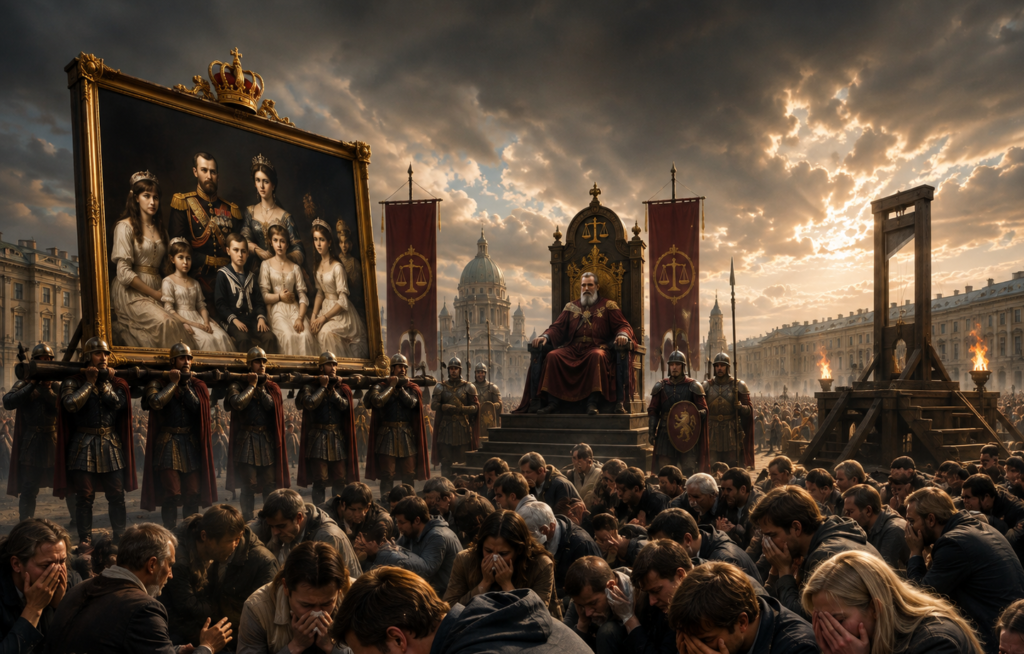
Trials of the descendants of those responsible for exiling the Christian Tsar will take place in every country that granted refuge to emigrants from Russia and the USSR
Tsar Nicholas and all his forefathers cannot and do not wish to share eternal life in Paradise with the murderers of their children and their descendants. This is the fundamental problem of all Russian (Ruthenian) and Soviet peoples, which will be revealed at the Last Judgment. They also do not wish to share Paradise with those who slandered Tsar Nicholas and claimed that he abdicated the throne—something that never happened and which no one has ever witnessed or seen.
5. Similar Imagery in the Quran
5.1. The Quran does not describe the exact sequence found in the Revelation of John and does not introduce the term «Last Judgment» in this specific sense. However, it contains closely related motifs: calamities as a consequence of human actions, warnings prior to punishment, the call to return to God, and then the final Judgment in which a person’s deeds are fully revealed to them.
5.2. In Surah Az-Zalzalah, it is stated that a person will see even the smallest atom of good and evil they have (99:7–8). In Surah Az-Zumar, a person who has committed numerous sins is forbidden to despair of God’s mercy; this is followed by a call to turn to the Lord before the punishment comes. This allows us to see a sequence: exposure of sin → warning → opportunity for repentance → punishment for those who do not return.
5.3. In this reading, Quranic texts provide an important parallel to the biblical idea of a preliminary judgment: God’s impact on the world not only punishes but also places humanity before a choice. However, the final decision belongs to God, not to man or a human judge. At the Last Judgment, human beings may be judged by God provided they aspire to have their names inscribed in the Book of Life. Otherwise, they can be judged only by the judges of the Last Judgment who fear God and are honest, just, and incorruptible judges.
6. Where the Last Judgment Leads
6.1. Revelation depicts Christ as Faithful and True, Who judges and makes war in righteousness; the armies of heaven follow Him. He is named King of Kings and Lord of Lords (Rev. 19:11–16). After the final judgment, a «new heaven and a new earth» appear (Rev. 21:1).
6.2. Therefore, in the proposed understanding, the Last Judgment is a threshold between the old and the new order. It prepares humanity for the Day of Judgment not by replacing the final judgment, but by bringing the living to a final moral choice. Some accept God, repent, receive mercy, and preserve life; others, despite warnings and the opportunity to convert, remain in their sins and perish. Every sinner knows or feels whether they are worthy or unworthy of forgiveness, for they have rejected God and loved all that is evil. Ultimately, God tests human hearts and renders to each according to their deeds.
7. Conclusion
7.1. Thus, we can distinguish two levels of judgment. The first is the Last Judgment as a preliminary, historical, and purifying judgment over the living, in which humanity is given the opportunity to see the consequences of evil, hear the testimony, repent, and separate from Babylon, atheism, and other forms of rebellion against God. The second is the final Day of Judgment, depicted in Revelation at the Great White Throne, when the books and the Book of Life are opened, and everyone receives their final verdict.
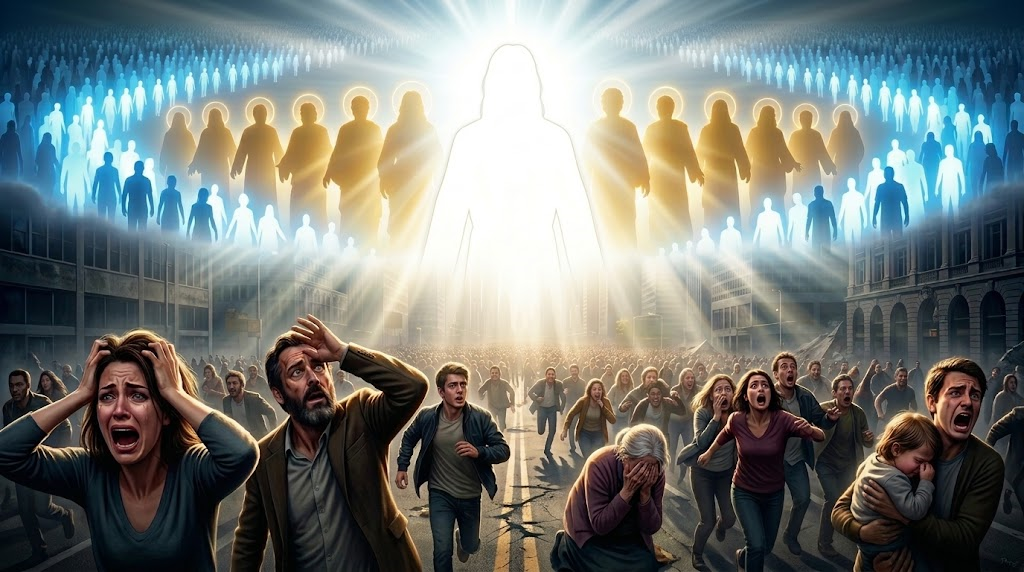
7.2. The central thought of this model is simple: the Last Judgment must not only punish, but above all prepare. It opens the opportunity for human beings to make a choice before the final Day of Judgment and the Second Coming of Jesus Christ arrive. Biblical and Quranic texts allow us to see both justice and mercy in this process: God judges and punishes the wicked and unfaithful, but at the same time, He leaves a path of repentance for those capable of turning to Him in sincere penitence.
7.3. Thus, the Last Judgment will begin with the living, rather than the dead.
Additional Project Materials
The «Vision of the Prophet Isaiah» and the «Apocalypse of Peter»; the latter is an apocryphal text and does not have the status of canonical Scripture.
Primary Sources
Bible: The Revelation of John the Theologian, chapters 1–22; especially Rev. 2–3; 6; 11; 13–14; 17–20; 21. Additional: Matt. 24–25; John 5:28–29; Dan. 12:1–3; Isa. 66:15–24.
Quran: 30:41–45; 39:53–55; 99:1–8; 101:1–11.
The Dread Judge of the Living and the Dead of This World Adist
30.08.2026
Добавить комментарий