
A Comprehensive Philosophical, Legal, and Ethical Analysis.
Everyone has the right to life, liberty, and security of person (Article 3 of the Universal Declaration of Human Rights).
Executive Summary: Human rights form the moral, legal, and structural bedrock of contemporary civilization. They establish the essential boundaries designed to protect individual autonomy, political integrity, and human dignity against arbitrary power. This paper examines the philosophical traditions, normative framework, key principles, and contemporary challenges defining human rights systems globally.
1. Introduction
Human rights represent the moral and legal entitlements inherent to all human beings, regardless of nationality, sex, national or ethnic origin, color, religion, language, or any other status. Far from being mere modern legal creations, human rights are the outcome of centuries of intellectual inquiry, philosophical debate, legal evolution, and intense societal struggle. In the contemporary world order, human rights serve a dual mandate: they articulate an ideal vision of human dignity and establish enforceable binding standards upon sovereign states. Understanding the fundamental foundations of human rights requires analyzing their philosophical roots, core principles, legal codification, and ongoing modern application.
2. Philosophical & Historical Foundations
The intellectual lineage of human rights spans across diverse civilizations, philosophical traditions, and historical epochs. Dating back to classical antiquity—including Stoic philosophy and later codified by medieval scholars like Thomas Aquinas—Natural Law posits that moral principles are rooted in the structure of the universe and human nature itself. Enlightenment thinkers, most notably John Locke, secularized natural law by asserting that individuals naturally possess inherent rights to life, liberty, and property. Locke maintained that political authority derives its legitimacy solely from a social contract designed to preserve these pre-existing rights. Immanuel Kant provided the fundamental ethical grounding for modern human rights through his concept of categorical imperatives. Kant argued that human beings possess intrinsic worth—or dignity—rather than a mere relative price. Consequently, persons must always be treated as ends in themselves, never merely as means to an end. This Kantian conception of dignity forms the explicit preamble foundation for major modern human rights treaties.
The 18th-century revolutions in North America and France translated philosophical abstractions into positive legal instruments. Documents such as the United States Declaration of Independence (1776) and the French Declaration of the Rights of Man and of the Citizen (1789) formally established that governance must be restrained by foundational individual liberties. However, all revolutions lead to violence, a relentless struggle for power, and perpetual confrontation between the authorities and the public. And violence cannot establish a peaceful, lawful state where human rights are protected.
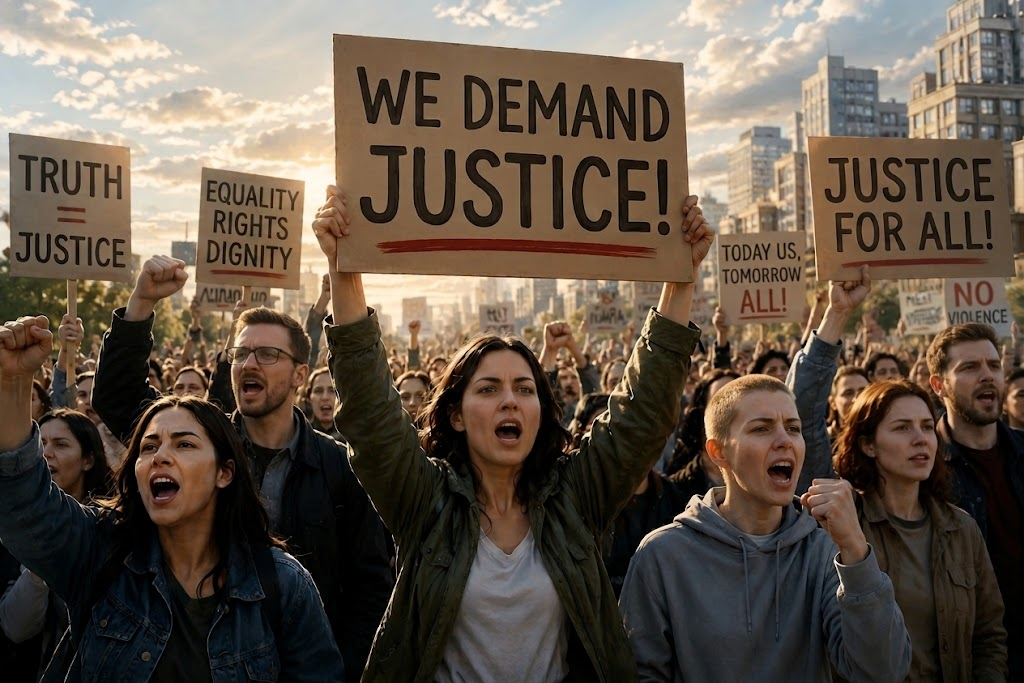
3. Core Principles and Characteristics.
The international consensus on human rights establishes five core tenets that define how rights are understood, interpreted, and applied:
- Universality: Human rights belong to every human being simply by virtue of being human. They apply equally to all people worldwide without distinction or discrimination.
- Inalienability: Rights cannot be surrendered, sold, transferred, or arbitrarily taken away. Restrictions are permissible only under strictly defined legal due processes (e.g., lawful imprisonment following a fair trial).
- Indivisibility: Civil, political, economic, social, and cultural rights are inherently linked. No tier or class of rights can be systematically privileged or dismissed in favor of another.
- Interdependence & Interrelatedness: The fulfillment of one right intrinsically depends upon the realization of others. For instance, the right to vote (political) is impaired without access to education (social/cultural) and safety (civil).
- Equality & Non-Discrimination: All individuals are entitled to equal protection under the law. Non-discrimination ensures that systemic biases based on race, gender, status, or religion do not strip individuals of fundamental guarantees.
Table 1: Generations of Human Rights
| Generation | Focus & Category | Key Examples |
| First Generation | Civil & Political Rights (Liberty-focused / Negative rights) | Right to life, freedom of speech, fair trial, voting rights, immunity from torture. |
| Second Generation | Economic, Social & Cultural Rights (Security-focused / Positive rights) | Right to education, housing, fair employment, healthcare, adequate standard of living. |
| Third Generation | Collective & Solidarity Rights (Group-focused / Emerging rights) | Right to a clean environment, peace, self-determination, development, shared heritage. |
4. International Codification & Legal Framework.
The modern era of human rights architecture was inaugurated in the aftermath of World War II and the atrocities of the Holocaust. Recognizing that domestic legal systems could be weaponized by tyrannical regimes, the international community created universal norms. Adopted by the United Nations General Assembly on December 10, 1948, the UDHR forms the foundational pillar of modern international law. Drafted by a diverse committee chaired by Eleanor Roosevelt, its 30 articles synthesize civil, political, economic, social, and cultural liberties into a unified vision. Although originally passed as a non-binding resolution, much of the UDHR has attained the status of Customary International Law. To create binding treaty obligations, the UN developed two seminal covenants in 1966, entering into force in 1976:
- International Covenant on Civil and Political Rights (ICCPR): Binds state parties to protect fundamental freedoms, personal security, due process, and democratic participation.
- International Covenant on Economic, Social and Cultural Rights (ICESCR): Requires states to progressively realize economic well-being, labor protections, health standards, and educational access.
Together, the UDHR, ICCPR, and ICESCR constitute the International Bill of Human Rights, supported by specialized conventions such as the Convention Against Torture (CAT) and the Convention on the Rights of the Child (CRC).
5. Contemporary Challenges and Future Horizons
Despite expansive international legal frameworks, the practical realization of human rights faces severe contemporary hurdles:
- Digital Age & Technology: Mass surveillance, algorithmic bias, online disinformation, and artificial intelligence present unprecedented threats to privacy, autonomy, and free expression.
- Authoritarian Backsliding: Illiberal regimes increasingly undermine the Rule of Law, judiciary independence, free press, and civil society organizations.
- Climate Change & Environmental Crisis: Environmental degradation directly threatens the fundamental rights to life, health, food, water, and shelter, disproportionately impacting vulnerable populations.
- Universalism vs. Cultural Relativism: Debates persist regarding whether universal standards impose Western values on diverse cultural contexts, highlighting the need for inclusive dialogue while upholding core dignities.
- Aggressive Warfare & Extrajudicial Violence: Unprovoked military aggression, illegal armed conflicts, and the targeted or indiscriminate killing of civilians without due process represent the most severe violations of the fundamental Right to Life and international humanitarian law, reducing basic human guarantees to total lawlessness.

6. Conclusion
From philosophical theories of natural law to enforceable international covenants, the human rights project represents humanity’s collective effort to construct a world governed by justice, equality, and law rather than force. The fundamental foundations of human rights rest upon the enduring belief that every human being possesses intrinsic dignity and worth.
Upholding these rights requires continuous vigilance, adaptive legal mechanisms, and an unwavering commitment from governments, institutions, and individuals alike to ensure that dignity remains universal and protected for generations to come.
Given that neither international organizations nor the global community hes been able to stop wars and mass atrocities, special measures will be taken at the Last Judgment against all rulers and leaders who show disregard for human life and fundamental rights. Consequently, the Last Judgment will commence with formidable international tribunals prosecuting these bloodthirsty rulers and their inner circle.No one will be able to escape or hide from the Last Judgment, for all sinners die and immediately fall into the hands of the servants of fiery Hell.
Adist
26.08.2026

Добавить комментарий