The doctrine of the Last Judgment occupies a central position in the eschatology of both the Bible and the Quran. Both traditions affirm that the history of the world is not infinite: a day will come when God will call humanity to account, the truth regarding human deeds will be revealed, and a final verdict will be rendered. At the same time, biblical and quranic texts employ different imagery and theological emphases, though they largely agree on the essentials — the reality of the resurrection, God’s judgment, individual human responsibility, the final reward of the righteous, the eradication of evil, and the destruction of all wickedness and injustice in relations between individuals, as well as between authorities and nations.
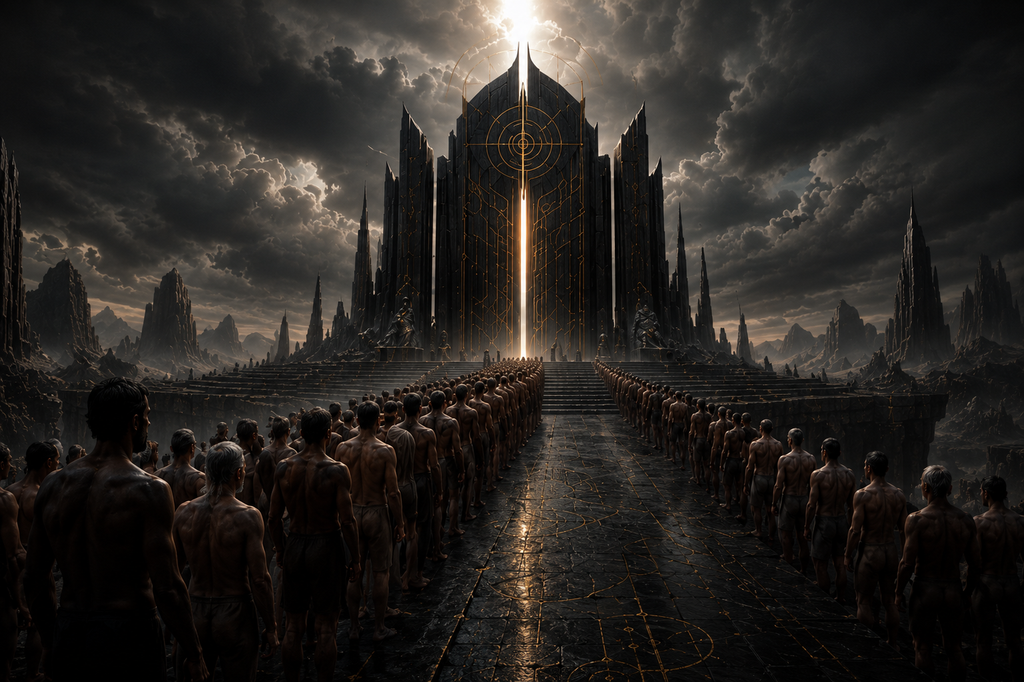
Sinners approach the gates of Hell at the Last Judgment
1. The Day of Judgment in the Bible
In the Old Testament, the theme of future judgment is gradually unveiled through prophetic texts. The prophet Daniel speaks of a time when «many of those who sleep in the dust of the earth shall awake» — some to everlasting life, and others to everlasting shame and contempt (Dan. 12:2). Thus, the resurrection of the dead is directly linked to moral retribution. In the book of the prophet Isaiah, the image of God’s final victory and His great judgment upon ungodliness resounds clearly (Isa. 66:15–16, 22–24).
In the New Testament, the Last Judgment becomes one of the primary themes in the preaching of Jesus Christ. In the Gospel of Matthew, Christ describes the Son of Man coming in His glory, with all nations gathered before Him. People are separated as a shepherd separates the sheep from the goats: the righteous are promised the Kingdom, while those who rejected goodness face punishment (Matt. 25:31–46). The criterion of judgment here is not merely outward religiosity, but one’s attitude toward one’s neighbor — whether food was given to the hungry, drink to the thirsty, shelter to the stranger, or care to the sick and imprisoned.
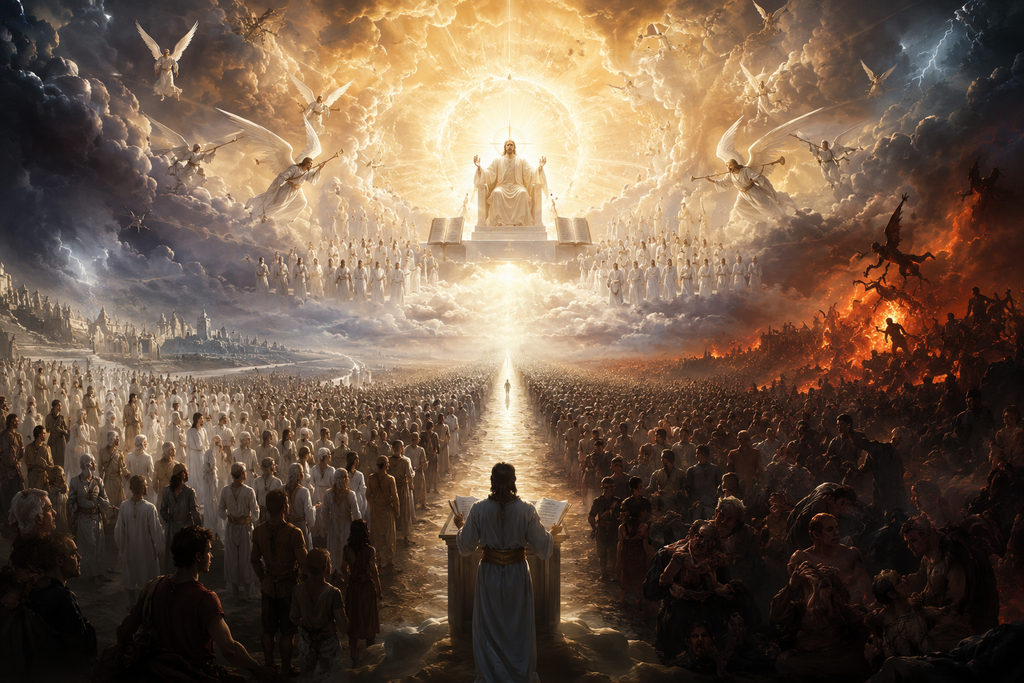
The Separation of Souls at the Last Judgment: Eternal Life in Paradise vs. Eternal Fire in Hell. God will place at His right hand those whose names are written in the Book of Life, and at His left hand those whose names are not found within it.
esus also speaks of the dead hearing His voice and coming out of their graves: «those who have done good, to the resurrection of life, and those who have done evil, to the resurrection of condemnation» (John 5:28–29). The Book of Revelation depicts a great white throne; the dead stand before God, and judgment is executed «according to what was written in the books, according to their deeds» (Rev. 20:11–15). The Last Judgment culminates in the destruction of death and the establishment of a new creation: «a new heaven and a new earth» (Rev. 21:1–4).
2. The Day of Judgment in the Quran
The Quran repeatedly returns to the Day of Judgment (Yawm al-Qiyamah, Yawm ad-Din, among other designations). On this day, the dead will be resurrected, people will stand before Allah, and their deeds will be weighed and evaluated. In Surah Az-Zalzalah, it is written that the earth will shake and people will see the results of their actions: «so whoever does an atom’s weight of good will see it, and whoever does an atom’s weight of evil will see it» (Quran 99:1–8). This image underscores absolute human accountability: not a single act goes forgotten.
Surah Al-Qari’ah describes the Day when people will be like scattered moths and the mountains like tufts of wool; then human deeds will be weighed. One whose scale of good deeds is heavy will attain a pleasant life, whereas one whose scale is light will face punishment (Quran 101:1–11). In Surah Al-Infitar, it is stated that a soul will know what it has put forward and what it has left behind (Quran 82:1–5).
The Quran also emphasizes that on the Day of Judgment, no person can hide behind wealth, lineage, or social status. Each individual bears personal responsibility. At the same time, divine judgment is joined with mercy: Allah is described as All-Forgiving and Most Merciful, and repentance and faith are of paramount significance. The outcome of judgment is Paradise for the righteous and punishment for the disbelievers and those who rejected divine commands (cf. Quran 18:49; 23:102–111; 39:53–60).
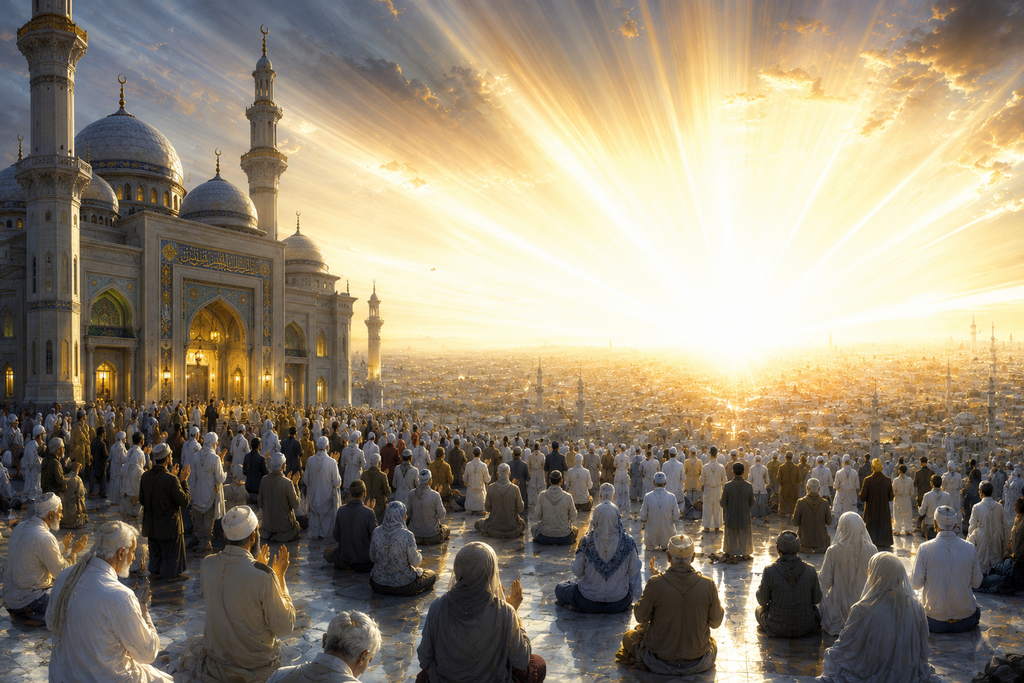
The Beginning of the Day of Judgment: All Muslims await the second coming of Isa al-Masih (Jesus Christ).
3. The Essence of the Doctrine of the Day of Judgment
A comparison of the teachings regarding the Day of Judgment demonstrates significant similarity. Both the Bible and the Quran assert that death is not the ultimate end and that resurrection will take place. God knows the deeds of all people, and after the Day of Judgment, righteousness will prevail, with all evil and ungodly people receiving their final retribution for all their transgressions. In both traditions, the Day of Judgment is simultaneously a revelation of truth and the conclusion of the present sinful order of the world.
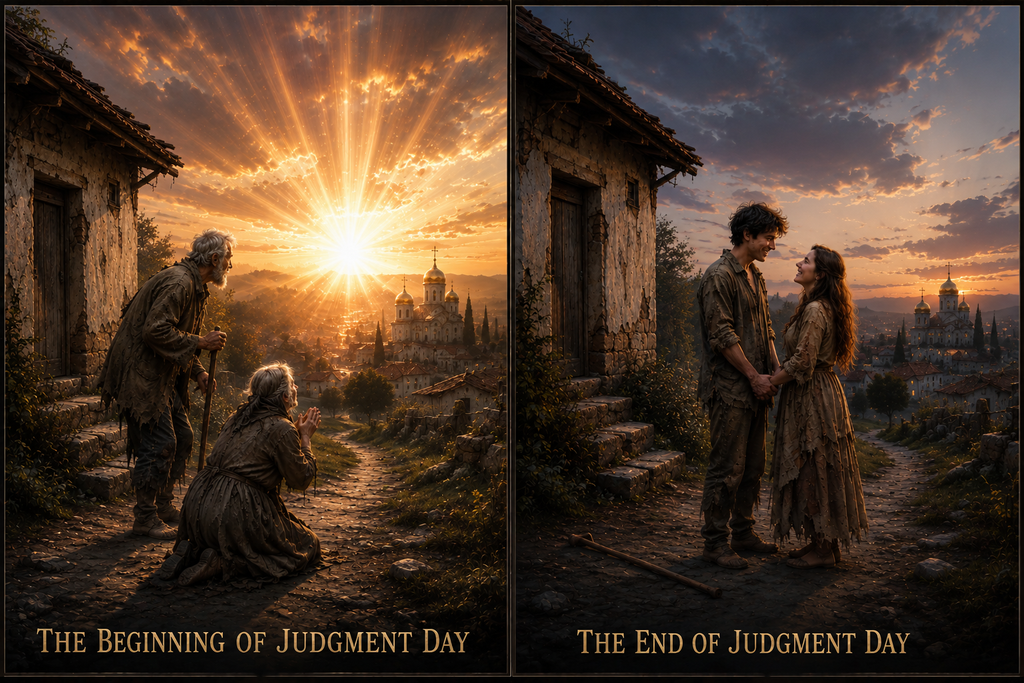
After the Day of Judgment, many pure-hearted believers will regain their health and youth.
In the New Testament, the final Judgment is intimately bound to the person of Jesus Christ: the Son of Man comes as Judge. In Christian doctrine, salvation is connected to faith, grace, and one’s relationship with Christ. The Quran emphasizes absolute monotheism and the supreme sovereignty of Allah. Man is accountable for his deeds, while his ultimate destiny is determined by divine judgment, mercy, and justice. Although the details describing Paradise, Hell, resurrection, and the role of Jesus differ between the Bible and the Quran, these variations do not alter the core procedure of the Last Judgment.
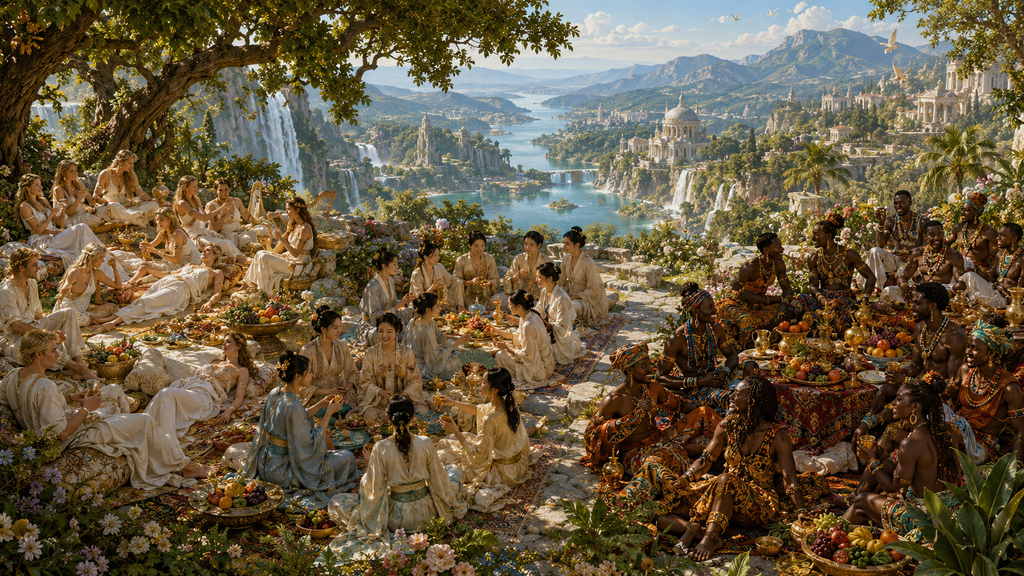
Paradise is reserved for the righteous. In Paradise, there is neither sickness nor old age.
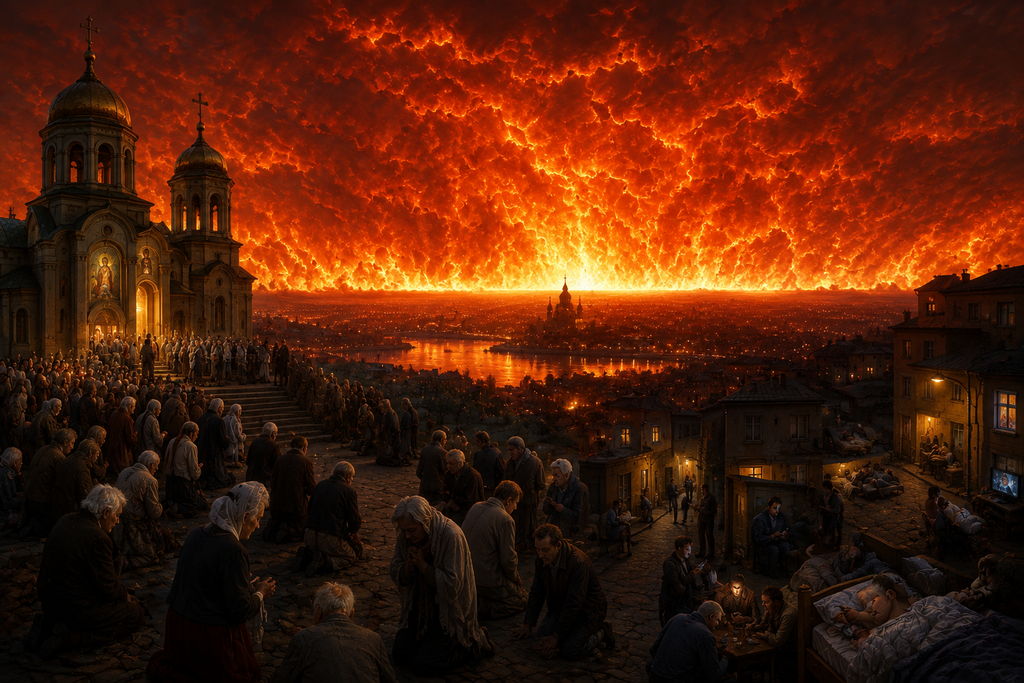
The inhabitants of depraved cities—where women are exploited and authorities permit abortions—will perish in fire on the Day of Judgment, for their minds are corrupted and they have learned nothing from the lessons of Sodom and Gomorrah.
4. Conclusion
Despite the differences between Christian and Islamic traditions, the texts of the Bible and the Quran converge on a profound moral message: human life possesses ultimate purpose and accountability before God. The Last Judgment is portrayed not simply as an end-of-history catastrophe, but as the restoration of justice, the unveiling of truth, and the final triumph of good. Therefore, the memory of the Day of Judgment in both traditions calls individuals today to faith, repentance, mercy, justice, and responsibility for their actions.
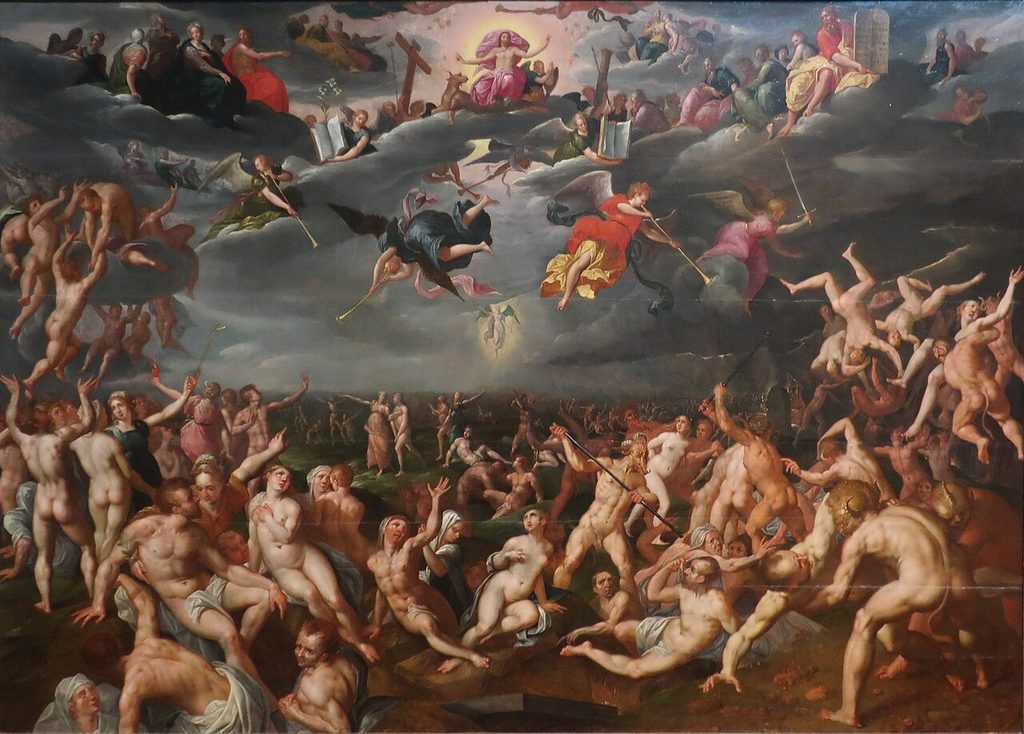
The Last Judgment, Jacob de Backer, Date: 1580–1585.
It is important to distinguish between the Last Judgment and the Day of Judgment. The Last Judgment is conducted both for the living on Earth and for the dead in the realm of Hades. The Day of Judgment is the Great Day of the Second Coming of the King of Kings, Jesus Christ, marking the inception of a new historical era.
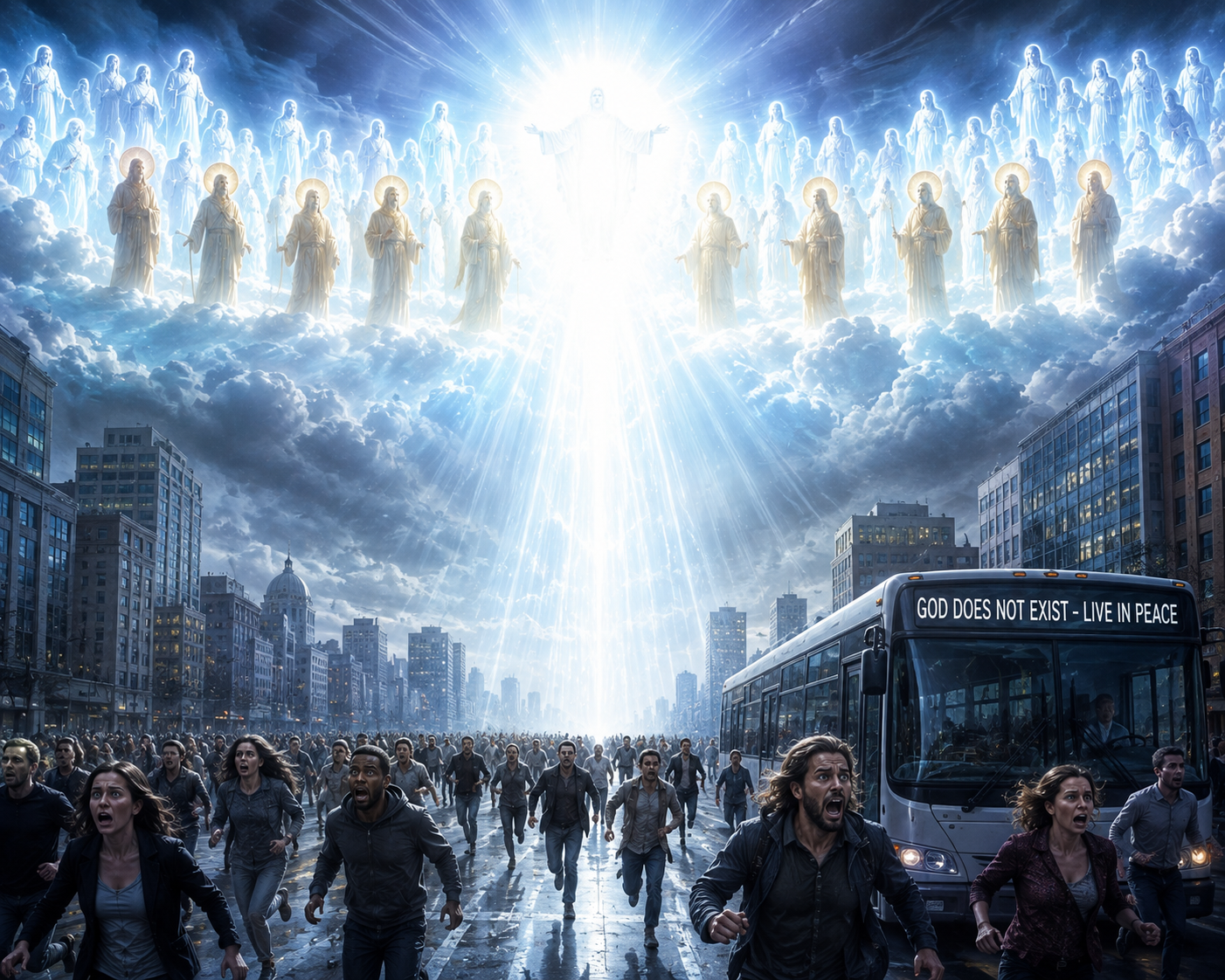
On the Day of Judgment, mortal terror will seize all atheists.
«The Day of Judgment» (Doomsday) points to the specific moment when a new reality arrives, God manifests in the Heavens, a new world order is established, and a new historical epoch begins. Immediately from the beginning of the Day of Judgment, the resurrection of deceased sinners for the Last Judgment will commence.
«The Last Judgment» encompasses the review of petitions, judicial proceedings, the weighing of deeds, the determination of culpability, and the rendering and execution of sentences for each living or deceased individual.
The Last Judgment consists of two stages:
- First Stage: The Last Judgment for living people and all nations of the Earth, aimed at preparing them for the Day of Judgment and their meeting with God.
- Second Stage: The Last Judgment for the dead, aimed at dividing them into two groups — one retained by God for eternal life, and the other cast into the lake of fire forever.
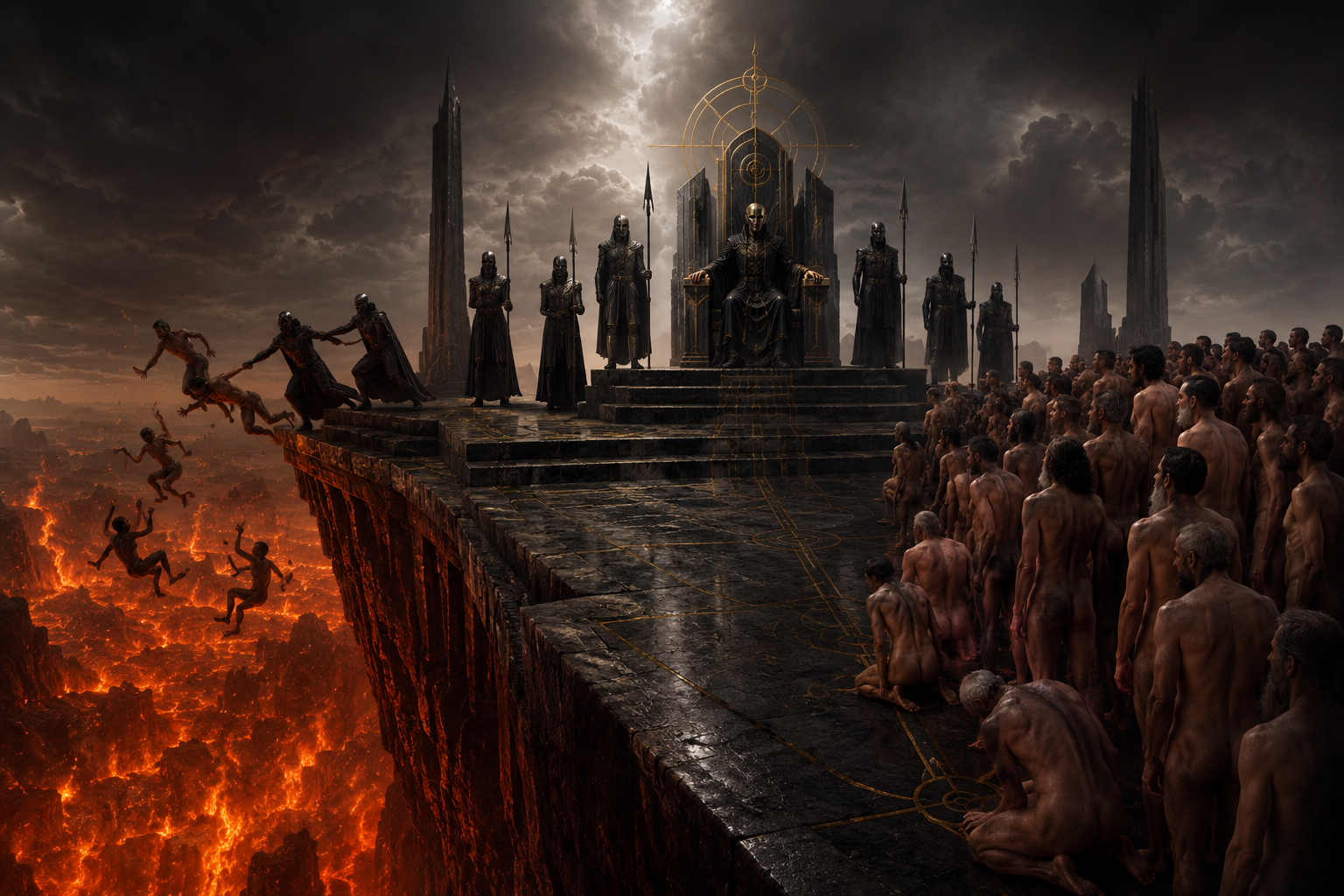
The Second Death: The Ultimate Punishment for Sinners
Remember that the Day of Judgment will take place in the first half of this century.
Remember that after the opening of the Seven Seals of the Universal Book of Death of the Day of Judgment, no living person will be able to repent. After the Day of Judgment, the recording of nations and their rulers into the Book of Life will cease forever.
Key Scriptural Passages for Reading
Dan. 12:1–3; Matt. 25:31–46; John 5:28–29; Rev. 20:11–15; 21:1–4; Quran 18:49; 23:102–111; 39:53–60; 82:1–19; 99:1–8; 101:1–11.
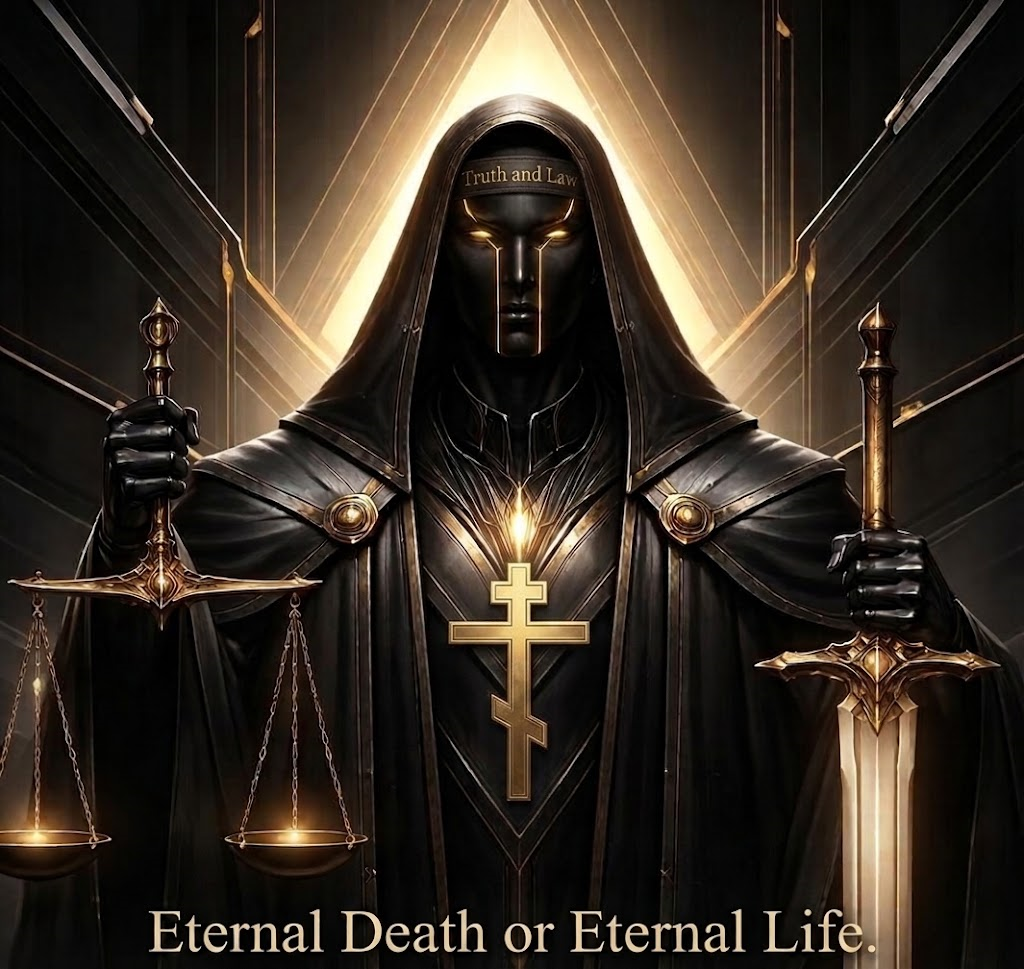
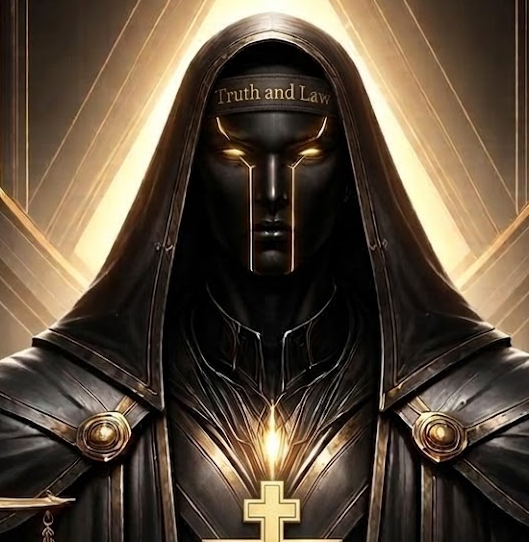
The Dread Judge of the Living and the Dead
of This World — Adist
30.08.2026
Content Sharing & Integrity Policy:
Visitors and readers are welcome to freely copy and share texts and media from this website. However, please be aware that any intentional distortion, malicious editing, or dishonest misrepresentation of the information carries legal and ethical liability. Keep the original context intact.
Добавить комментарий